

IAAD Working Together with the CBSA
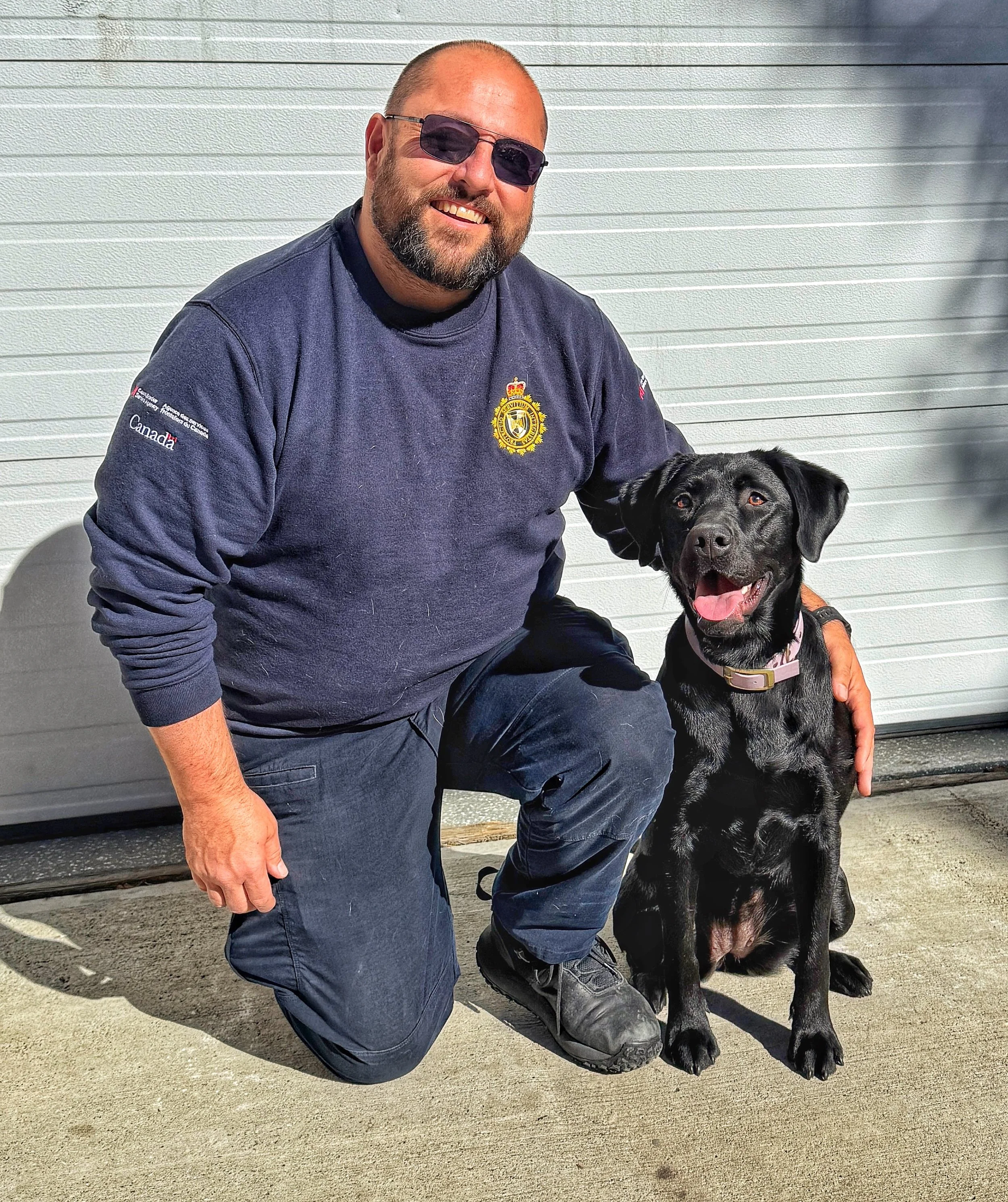
IAADs Nori and CBSA Dog Handler
Nori’s Getting Some Exciting Training!
Assistance Dog organizations are built upon a simple yet powerful idea: that dogs, when given the right guidance, can be a lifeline for the people they support. These dogs are trained to assist individuals with physical and medical disabilities—opening doors, retrieving items, alerting to medical conditions, and providing a level of emotional stability that technology alone cannot replicate.
At IAAD, success isn’t defined by whether a dog completes the program—it’s defined by the dog itself. A successful IAAD dog is emotionally well, confident in their environment, and genuinely comfortable in the work they’re asked to do. Happiness isn’t just enthusiasm or drive—it’s stability, resilience, and ease in the world around them. Reliability grows from that foundation. It means a dog can perform learned behaviours consistently, recover appropriately from stress, and remain steady across environments, distractions, and real-life demands.
These two qualities must exist together. A dog can be highly trained but unhappy—and that is not success. A dog can be eager but unreliable—and that is not success either. Our goal is to develop dogs who are built for this work—dogs who want to do the job, feel good doing it, and can sustain it long-term. When a dog shows us they are happy and reliable, we move forward. When they show us they are not, we listen—and we adjust the path.
Not every dog is meant to be an assistance dog, and that’s where an important second path begins. Some dogs simply don’t thrive in this role, but that doesn’t mean they lack ability—it means their strengths lie elsewhere. High energy, intense curiosity, independence, and strong scent drive are not flaws. In the right context, they are exactly what make an exceptional detection dog. That’s why IAAD works with the CBSA and other detection agencies to explore alternative careers for these dogs.
IAAD’s Nori is one of those dogs. She is currently traveling to Rigaud, Quebec, to work with handlers in a detection program, where she’ll spend the next three months testing her skills. From there, she’ll move into her next phase—and we’re excited to see where her path leads. Because for us, success has never been about forcing a dog into a role—it’s about recognizing who they are and placing them where they can truly thrive.
